Keynote Talk 1 (Sep. 30th)
Face Image Synthesis, Enhancement, and Assessment for Better Face Recognition
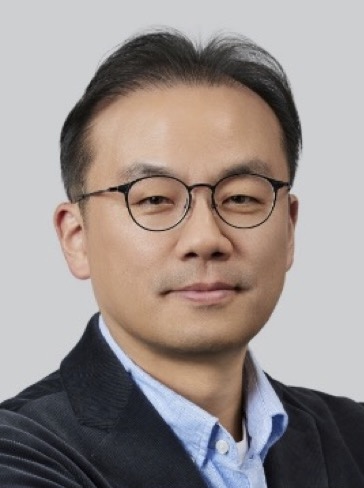
Prof. In Kyu Park
Inha University, Korea
Abstract
Face recognition performance is often limited not by algorithms but by data — datasets that lack scale and diversity, and whose collection raises growing ethical concerns. This talk presents a line of work tackling these limitations through three directions: synthesis of diverse, identity-consistent face data and controllable editing; enhancement of degraded, non-frontal real-world face images through unified restoration and efficient frequency-aware models; and assessment via face-specific, interpretable quality metrics and bias-aware identity verification. Together, these form a data-centric pipeline - generate, repair, verify - for advancing face recognition responsibly.
Biography
In Kyu Park received the B.S., M.S., and Ph.D. degrees in electrical engineering and computer science from Seoul National University, in 1995, 1997, and 2001, respectively. From September 2001 to March 2004, he was a member of the Technical Staff with the Samsung Advanced Institute of Technology. Since March 2004, he has been with the School of Electrical and Electronic Engineering, Inha University, where he is currently a Full Professor. From January 2007 to February 2008, he was a Visiting Researcher with Mitsubishi Electric Research Laboratories (MERL). From September 2014 to August 2015, he was a Visiting Associate Professor with MIT Media Lab. From July 2018 to June 2019, he was a Visiting Scholar with the Center for Visual Computing, University of California, San Diego (UCSD). His research interests include the joint area of computer vision, image processing, and deep learning. He is a member of ACM. Currently, he is serving as an Associate Editor for IEEE Transactions on Pattern Analysis and Machine Intelligence and the Vice President of Korea Computer Vision Society (KCVS).
Keynote Talk 2 (Oct. 1st)
Beyond Pixel-Level Fusion: Rethinking the Utility and Evaluation of Visible-Infrared Image Fusion
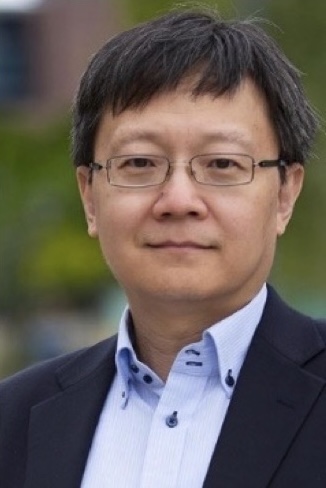
Prof. Zheng Liu
The University of British Columbia, Canada
Abstract
Visible-Infrared Image Fusion (VIF) has seen rapid advances, driven by deep learning models competing for top ranks on quality metrics based on SSIM, entropy, and spatial frequency, etc. However, this benchmark-driven progress faces a fundamental validity crisis: do these statistical micro-improvements translate into real-world value?
This talk critically re-examines the current evaluation paradigm of pixel-level VIF. First, from a metrological perspective, the widely pursued performance margins fall well within the intrinsic residual uncertainty of the metrics themselves when calibrated against human perception, making many claimed SOTA breakthroughs statistically indistinguishable from noise. Second, from an application perspective, we analyze the architectural misalignment between pixel-level blending and downstream machine vision tasks, highlighting why explicit pixel fusion often yields suboptimal semantics compared to feature-level integration.
Rather than chasing paper-thin metric gains, we argue that the field must shift toward task-driven utility and perceptual significance. We outline a new conceptual diagnostic framework designed to bridge the gap between numerical metrics and practical utility. This talk aims to spark a critical discussion on redefining progress and future research methodologies in cross-modal image fusion.
Biography
Prof. Zheng Liu is a full professor in the School of Engineering at the University of British Columbia, Okanagan campus, Canada. He was with the Nanyang Technological University (Singapore), the National Research Council of Canada (Ottawa, ON, Canada), and the Toyota Technological Institute (Nagoya, Japan) as a research fellow, research officer, and professor, respectively, from 2001 to 2015. He received a Ph.D. from Kyoto University (Japan) in 2000 and a second Ph.D. from the University of Ottawa in 2007. His research interests include machine/computer vision, data/information fusion, sensor and measurement systems, non-destructive evaluation, and digital twins. Dr. Liu is a fellow of SPIE, the Engineering Institute of Canada (EIC), and the Canadian Academy of Engineering (CAE). He has professional engineer licenses in both Ontario and British Columbia.